- Weekly AI Marketing Brief
- Posts
- AI Is a Team Sport (For Now)
AI Is a Team Sport (For Now)
Why content marketers need a bench of AI tools.

Lisa Peyton
March 12, 2026
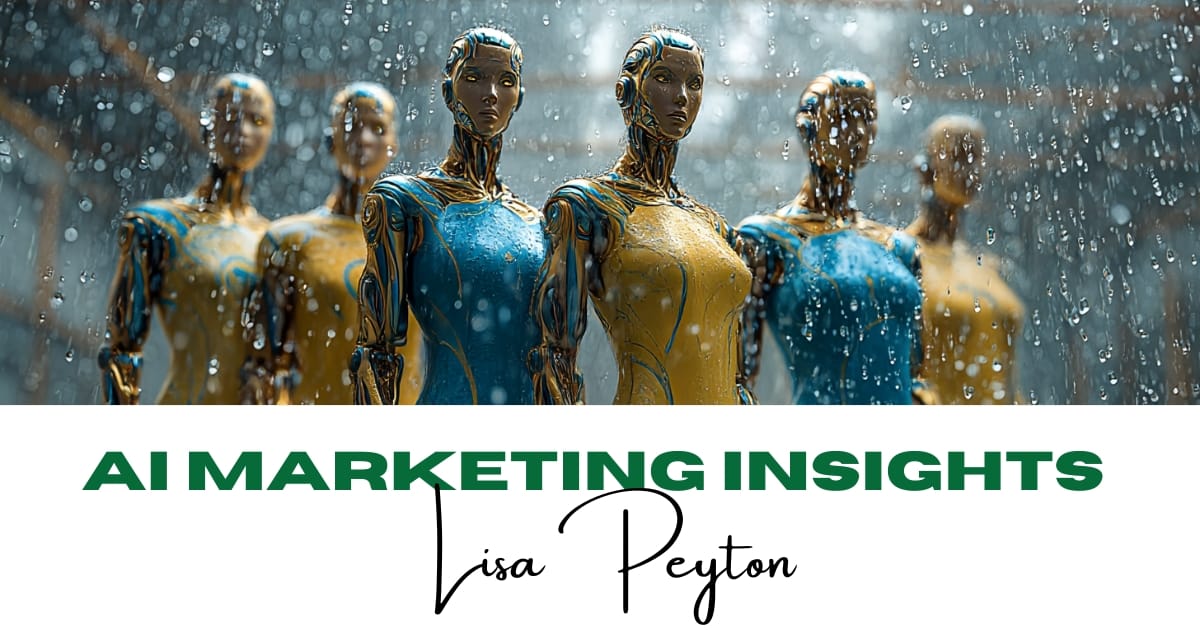
Almost daily, I’m struck by how much my workflows have changed since I started building my AI bench.
At any given time, I have at least three AI tools open — working in tandem — with me as the AI operator coordinating the outputs. I typically kick off every project with Claude. He’s my strategic thinker. Claude builds the prompts for my team of creative experts: ChatGPT for creative copy, Midjourney for jaw-dropping artwork. Then I take those outputs into Canva and assemble whatever visuals my content needs. At last count, I have a bench of at least a dozen AI tools, each one with a different superpower, each one bringing an important skill to the job.
So I’m continually shocked when I survey marketers and many of them tell me they use only one LLM — usually ChatGPT.
I can’t imagine relying on just that one tool. Without Claude, who would tell ChatGPT what (and how) to write? Who would help me fact-check and verify the LLM’s output? Not itself, surely.
We are not in a “one and done” AI era. And that makes things harder, yes — but it also makes diversifying your AI tool bench imperative.
🔥 This Week's Hot Takes: AI Marketing Edition
No Single AI Wins Everything — And That's the Point (Lisa Peyton) – I break down why relying on one LLM is like trying to build a house with just a hammer. Drawing on benchmark data, the Stanford HAI 2025 AI Index Report, and my own testing, I make the case that AI orchestration — coordinating multiple specialized tools — is the defining marketing skill of the moment.
Ethan Mollick Maps the Shape of AI's Exponential Curve (One Useful Thing) – Mollick's latest piece documents AI's rapid improvement across every major benchmark while acknowledging that most organizations are still early in adoption.
The Social Media Manager's AI Tool Guide for March 2026 (Lisa Peyton) – A task-by-task breakdown of the best AI tools for writing, images, video, and audio. Every category has a different winner: ChatGPT for captions, Claude for analysis, Perplexity for research, Midjourney for aesthetics, Ideogram for text-in-image work. This is your cheat sheet.
Ideogram vs. Nano Banana Pro: The Text-in-Image Showdown (Lisa Peyton) – In a head-to-head test on rendering text in AI-generated images, Ideogram won on design polish while Google's Nano Banana Pro won on exact text accuracy. Same prompt, different strengths — proving once again that tool selection depends entirely on the job.
Canva Launches Magic Layers (Canva Newsroom) – Canva just dropped a feature that converts flat images — including AI-generated ones — into fully editable, multi-layered designs. Text becomes live text boxes, objects become movable elements, and layouts are preserved. This solves one of the biggest pain points in AI-generated content: the inability to make small edits without starting over.
How AI Buying Is Reshaping B2B Vendor Selection (MarTech) – As B2B buyers increasingly use AI to research and shortlist vendors before ever talking to a human, CMOs who control structured data, proof points, and category language gain a massive advantage. Marketing is becoming infrastructure for how companies get discovered by machines.
A 90-Day Sprint to Build AI-Citable Authority (MarTech) – A practical framework for becoming a source that AI engines cite. The approach: mine original data from your customers in month one, validate it at trade shows in month two, then launch an interactive tool in month three. Smart, actionable, and built for the zero-click world.
How AI Is Redefining Growth Marketing — And Why Humans Still Matter (Forbes Business Development Council) – The piece argues that AI is shifting growth marketing from execution to strategic oversight. The competitive advantage isn't automating everything — it's knowing what to automate and what to keep human. Strategy, empathy, and creativity remain irreplaceable.
Generative AI Is Ready. Are Your Marketing Operations? (Deloitte/WSJ) – Deloitte Digital's research found that 29% of brands have already implemented GenAI in marketing operations, and among those using it extensively, revenue goals were exceeded by 22% on average. The question is no longer whether GenAI works for marketing — it's whether your operations are structured to take advantage of it.
🧪 The Alchemist's Lab: Tools I've Been Testing
Wondering An AI-powered learning platform that breaks complex topics into visual, interactive, and structured micro-courses — designed to help you learn what you thought you couldn't, in tiny chunks. For marketers, the application is straightforward: use it to quickly upskill yourself or your team on new concepts — whether that's AI fundamentals, data literacy, or emerging marketing frameworks — without committing to a full course. The bite-sized format makes it easy to fit learning into the cracks of a busy workweek. Worth bookmarking if you're trying to build AI fluency across your marketing team without overwhelming them.
💼 Industry Moves & Grooves
Canva goes deeper on AI-native design. The launch of Magic Layers signals Canva's shift from a design tool that uses AI to an AI company that does design. Co-founder Cameron Adams has openly acknowledged that AI outputs have been "a dead end" until now — flat files you can't edit. Magic Layers solves that problem and positions Canva as the connective tissue between AI-generated content and publish-ready marketing assets.
Adobe bets big on sports as AI marketing proof of concept. The expanded MLB partnership is notable because it deploys Adobe's full enterprise AI suite — from content supply chain automation to LLM search optimization — at league scale. Adobe is using sports partnerships (MLB, Premier League, PGA Tour) as high-visibility testbeds to demonstrate what AI-powered marketing operations look like in practice.
The "AI-citable authority" race heats up for B2B. Both MarTech articles this week point to the same seismic shift: as AI agents increasingly mediate B2B buying decisions, brands need to optimize not just for human discovery but for machine evaluation. Structured data, verifiable proof, and original research are becoming the new currency of visibility.
🎓 AI Marketing Master Class Moment
Your AI Agent Can Use Canva Now. How Canva's AI inside Your Chatbot Works w/ Canva's Danny Wu Watch here
Danny Wu, Head of AI Products at Canva, explains how Canva uses MCP (Model Context Protocol) to expose its design tools across ChatGPT, Claude, and Microsoft Copilot with a shared codebase. He describes AI agents as essentially LLMs given tools and trained to operate in a loop — not magic, just loops with access to functions. Wu also mentions he personally switches between Claude and Gemini depending on the task. Practical takeaway: if the person leading AI product at a 230-million-user design platform doesn't rely on a single model, neither should you. This is essential viewing for understanding where AI tool interoperability is headed.
🤖 AI Whispers (That You'll Want to Shout About)
The biggest whisper this week is about convergence and fragmentation happening simultaneously. On one hand, MCP is making it easier for AI tools to talk to each other — Canva is already exposing its design capabilities across multiple AI platforms. On the other hand, the benchmark data shows AI models diverging more sharply on specialized tasks even as they converge on general capabilities.
What this means for marketers: the tool landscape is going to get simpler and more complex at the same time. Simpler because interoperability will reduce the friction of tool-hopping. More complex because the performance gap between "good enough" and "best for this specific task" will widen. The marketers who understand the nuances — who know that Ideogram beats Midjourney on text rendering, or that Claude outperforms ChatGPT on analytical tasks — will continue to outperform those who default to whatever's most familiar.
🏆 My Take: What This Means for Your Marketing
Here's the ONE thing I want you to take away this week: the skill of AI orchestration is your moat.
Every piece of news this week — from Mollick's benchmarks to Canva's Magic Layers to Adobe's MLB deployment — points to the same conclusion: the value isn't in any single AI tool. It's in knowing which tool to use for which task and how to coordinate the outputs into something greater than the sum of its parts.
This is exactly what I do every day. Claude handles strategy. ChatGPT handles creative copy. Midjourney handles visuals. Canva assembles. Perplexity researches. I'm the orchestra conductor. And that orchestration skill is what makes the output better than anything one tool could produce alone.
Your action item this week: Open a second AI tool. If you're only using ChatGPT, try Claude for your next strategy or analysis task. If you're only using Claude, try ChatGPT for your next batch of social captions. Start with two. Get a feel for what each one does better. Build from there. Your bench doesn't need to have 12 tools on it tomorrow — but it absolutely needs more than one.
🥊 Battle of the Week: Design Polish vs. Text Accuracy
This week's showdown comes straight from the testing bench: Ideogram vs. Google Nano Banana Pro on text-in-image rendering.
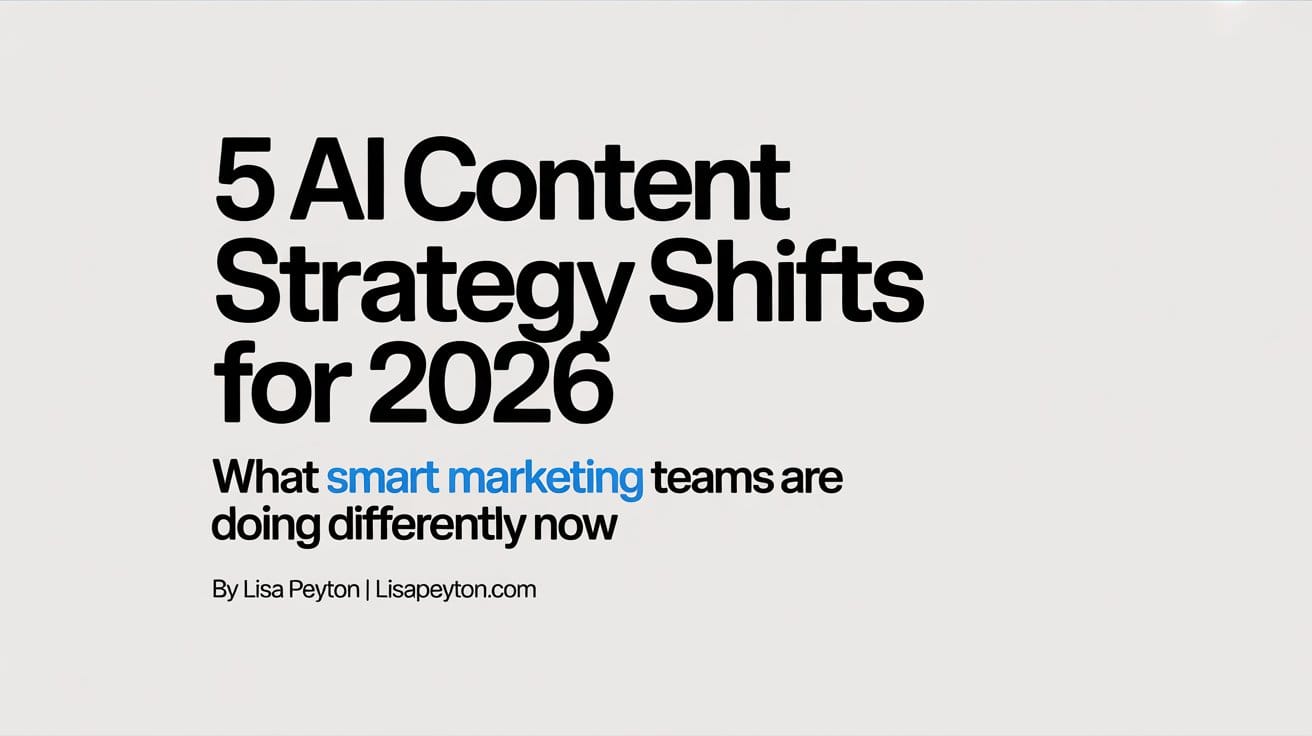
Ideogram's corner (Output above): Produces more polished, modern, and design-forward visuals. The outputs look like something a professional designer created. But it takes liberties with your text — changing capitalization, tweaking wording. It prioritizes how it looks over what it says.
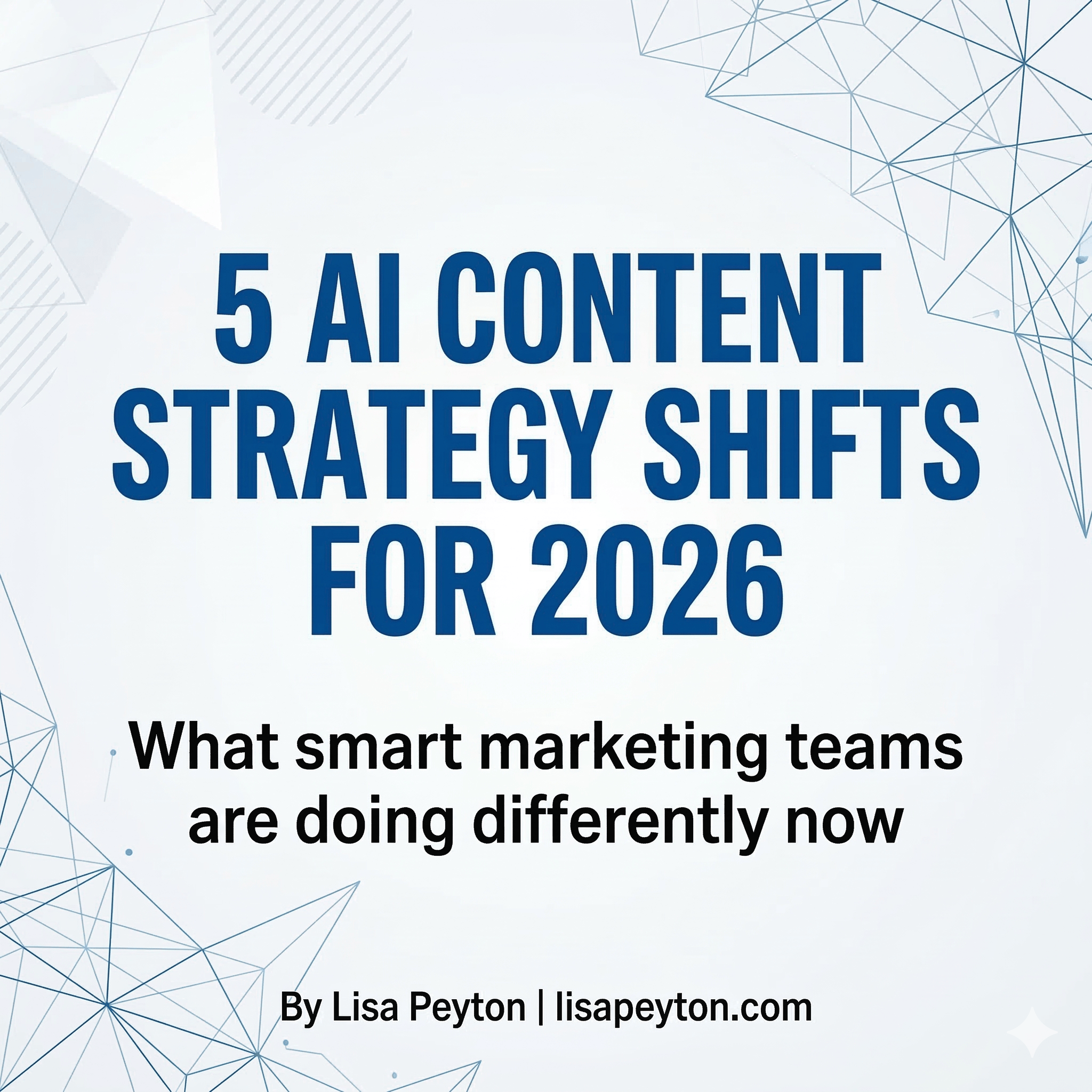
Nano Banana Pro's corner (Output above): More faithful to your exact prompt text, preserving capitalization and wording as specified. But the designs feel more generic — like a conference flyer template rather than a premium brand asset.
Lisa's verdict: This isn't an either/or — it's a workflow question. Use Ideogram when you need something publish-ready and visually elevated. Use Nano Banana Pro when exact text compliance is non-negotiable.
Before You Go: Hit reply and tell me — what's your biggest AI marketing challenge right now? I read every response and it helps shape future newsletters!
That's a wrap on this week's AI marketing alchemy! Keep experimenting, keep transforming, and remember — true magic happens when we blend AI efficiency with human creativity.
Crafted with passion (and a dash of AI alchemy) by Lisa Peyton | AI Practitioner, Professor, and Pioneer
Let's connect in the digital realm: https://linktr.ee/lisapeyton
If you want a single place to find practical AI help for your marketing work, I put together a hub of resources that can support you at every stage. Take a look here for tools and learning that can help sharpen your AI marketing practice: https://lisapeyton.com/ai-marketing-resources/