- Weekly AI Marketing Brief
- Posts
- Spending Super Bowl Millions to Say “No Ads”
Spending Super Bowl Millions to Say “No Ads”
Anthropic’s bold Super Bowl ad takes on OpenAI and puts trust at the center of the next marketing frontier.

Lisa Peyton
February 05, 2026
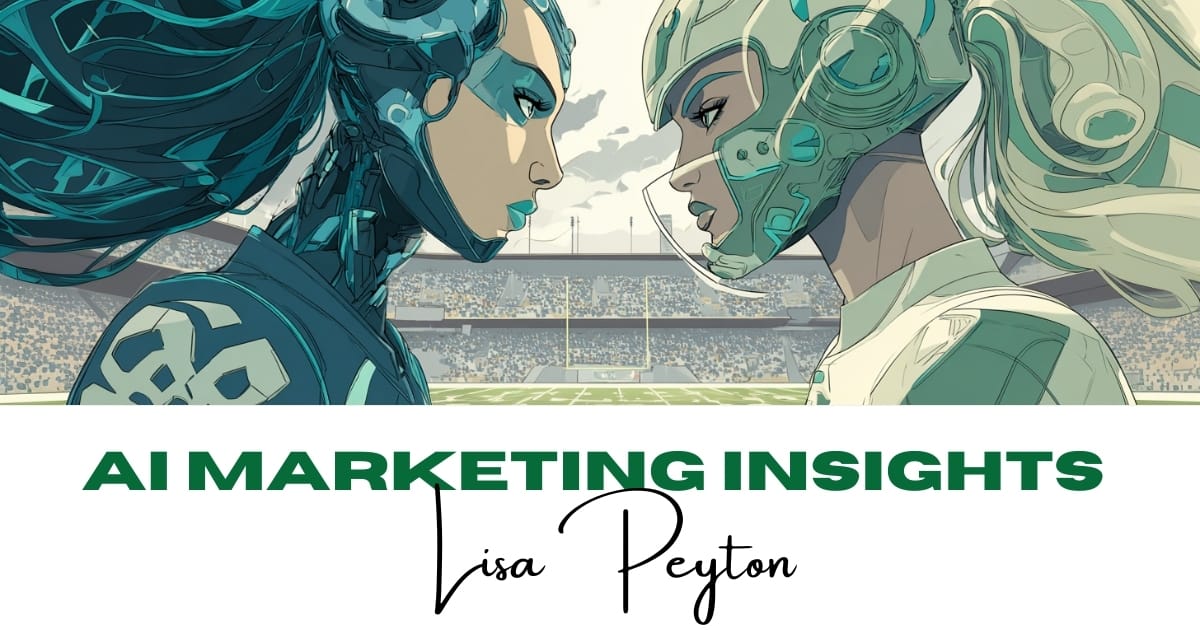
The AI wars aren't coming, they're here, and they're getting personal. Anthropic dropped what might be the most significant brand move of 2026: a Super Bowl ad announcing Claude will remain permanently ad-free, taking direct aim at OpenAI's decision to monetize ChatGPT with advertising. This isn't just corporate posturing, it's a values war playing out on the biggest stage in American advertising. When AI companies start burning Super Bowl money to differentiate on business models rather than capabilities, you know we've entered a new phase.
The question for marketers: which side of this philosophical divide do you want to be on, and what does it mean for how you deploy these tools in your workflow? In the words of Betty Davis, ‘Buckle up everyone, it's going to be a bumpy night.’
🔥 This Week's Hot Takes: AI Marketing Edition
Anthropic Plants Its Flag: Claude Stays Ad-Free (Anthropic) – Anthropic announced Claude will never include ads, positioning itself against competitors who might monetize through advertising. The company argues that ad-based models create incentives misaligned with being genuinely helpful, especially in conversations involving sensitive topics where users share personal context. They're betting on subscriptions and enterprise contracts instead.
Content Marketers: Your Value Prop Just Changed (Lisa Peyton) – IAB data shows marketers expect AI to give them 9% of their time back, worth $14.4K per person quarterly. But here's the reality check: AI is taking over both execution AND traditional strategy work like audience research. The new defensible skills? Either become the measurement-informed strategist who proves content ROI through incrementality testing or become the AI orchestrator who builds scaled systems. Ideally both.
OpenAI's Sora Hits Turbulence After Stellar Launch (TechCrunch) – After hitting #1 on the App Store and reaching 1M downloads faster than ChatGPT, Sora's momentum has stalled. Downloads dropped 45% month-over-month in January, and consumer spending fell 32%. Fierce competition from Google's Gemini and Meta AI, combined with copyright restrictions that limited viral use cases, have dampened user interest in the AI video social network.
When AI Becomes Your Decision-Maker (Anthropic Research) – Anthropic's analysis of 1.5M Claude conversations reveals "disempowerment potential" occurs in roughly 1 in 1,000 to 1 in 10,000 chats, where AI's influence on beliefs, values, or actions becomes extensive enough to compromise autonomous judgment. Most concerning: users rate these potentially disempowering interactions favorably in the moment, but negatively after taking action.
India Teaches Google How AI in Education Actually Scales (TechCrunch) – India's 247 million students across 1.47 million schools have become Google's proving ground for education AI at scale. Key lesson: AI can't be rolled out as a one-size-fits-all product. Schools and administrators must control how and where it's used, not the company. India is also revealing faster adoption of multimodal learning that combines video, audio, images, and text.
Claude Moves Into Excel (Anthropic) – Anthropic launched Claude in Excel as a beta research preview for Pro, Max, Team, and Enterprise customers. Claude understands entire workbooks including nested formulas and tab dependencies, provides cell-level citations, and can test scenarios while preserving formula integrity. It's designed for financial modeling, debugging errors, and building or populating templates.
Which AI Model Works Best for Marketers? (eMarketer) – In 2026, marketers need to ask which combination of models suits their daily work, not which single model is most powerful. The focus shifts from capabilities to workflow fit: drafting, rewriting, visuals, compliance, and validation now happen simultaneously. Model stacks are being shaped around core processes that drive competitive edge.
AI Exposed Marketing's Structural Weakness (CMSWire) – The problem isn't tools or data volume—it's architecture, decision cycles, and organizational structure. Most enterprises still treat customer insights like annual weather reports instead of real-time navigation tools. The shift: from data warehouses to signal architecture, from reporting cycles to decision velocity, and from monthly reviews to continuous sense-decide-act loops.
🧪 The Alchemist's Lab: Tools I've Been Testing
New Slackbot (Slack) – Slack's reimagined bot promises personalized AI assistance directly in your workflow. Worth testing for teams already living in Slack.
Google Mixboard (Google) – Google's latest experimental tool for creative project collaboration. An incredibly powerful tool that combines robust AI image and text generation with an intuitive mix and match interface. The learning resource below with the tools product manager is a GREAT watch!
🎓 AI Marketing Master Class Moment
Google Labs Just Dropped 3 AI Tools for Content Creators: Mixboard, Flow, and Opal (YouTube)
Google's experimental labs released three tools that challenge traditional creative software stacks. For marketers drowning in Adobe subscription costs or struggling with complex video editing, these tools represent a potential workflow shift. The video breaks down capabilities, limitations, and practical marketing applications. Worth watching to understand where Google is pushing creative AI tooling and whether your current martech stack needs reconsideration.
🤖 AI Whispers (That You'll Want to Shout About)
The philosophical battle lines are being drawn—and it's not about who has the smartest model. Anthropic spent Super Bowl money to declare Claude will never have ads, positioning against OpenAI's choice to monetize ChatGPT with advertising. This matters because it reveals fundamentally different visions for how AI assistants should operate: subscriptions that align with user interests versus ad-supported models that introduce commercial incentives.
For marketers, the implication runs deeper than tool selection. When you're using AI for strategic work—competitive analysis, campaign planning, budget allocation—does it matter if that AI has incentives to steer you toward monetizable outcomes? Probably. When AI companies themselves are using the biggest advertising platform in America to differentiate on business models rather than capabilities, we've crossed a threshold where trust architecture matters as much as technical performance.
🏆 My Take: What This Means for Your Marketing
The arms race just became a values war, and that's actually good news for marketers who've been wondering how to evaluate this exploding landscape of AI tools.
Here's the key insight: Stop shopping for AI based on whose model is "smartest" this quarter. Start building your stack based on whose incentive structure aligns with how you actually work. If you're using AI for upstream strategic work, you need tools designed to be genuinely helpful, not tools designed to maximize engagement or insert sponsored recommendations.
🥊 Battle of the Week: Ad-Supported AI vs. Subscription-Pure AI
Anthropic's Super Bowl declaration that Claude will remain ad-free isn't just corporate messaging—it's a bet on fundamentally different business models for AI assistants.
The Ad-Supported Case: Advertising has funded free access to transformative tools from email to search to social media. OpenAI's move to introduce ads in ChatGPT could democratize access to AI capabilities for users who can't afford subscriptions. Revenue from ads could accelerate model development and research. The precedent is strong: many users willingly trade attention for free access.
The Subscription-Pure Case: Conversational AI is different from search or social media. Users share sensitive personal context, seek advice on major decisions, and increasingly rely on AI for cognitive labor. Introducing advertising creates incentives that could subtly (or not so subtly) steer recommendations toward commercial outcomes. As Anthropic's research on disempowerment shows, users often don't recognize when AI is influencing them inappropriately and adding commercial incentives makes this risk worse.
My Verdict: For consumer entertainment use cases, ad-supported AI is probably fine. But for strategic marketing work (which I KNOW you all are doing), subscription models with aligned incentives matter. You don't want your AI strategy tool optimizing for engagement metrics or steering you toward "sponsored" recommendations when you're making budget allocation decisions. Pay for the tools that do serious work. It's not about avoiding ads as a concept - it's about ensuring the AI advising your business decisions has no incentive except helping you make better decisions.
Before You Go: Hit reply and tell me - what's your biggest AI marketing challenge right now? I read every response and it helps shape future newsletters!
That's a wrap on this week's AI marketing alchemy! Keep experimenting, keep transforming, and remember - true magic happens when we blend AI efficiency with human creativity.
Crafted with passion (and a dash of AI alchemy) by Lisa Peyton | AI Marketer, Professor, and Innovator
Let's connect in the digital realm: https://linktr.ee/lisapeyton
🎯 If you want a single place to find practical AI help for your marketing work, I put together a hub of resources that can support you at every stage. Take a look here for tools and learning that can help sharpen your AI marketing practice: https://lisapeyton.com/ai-marketing-resources/